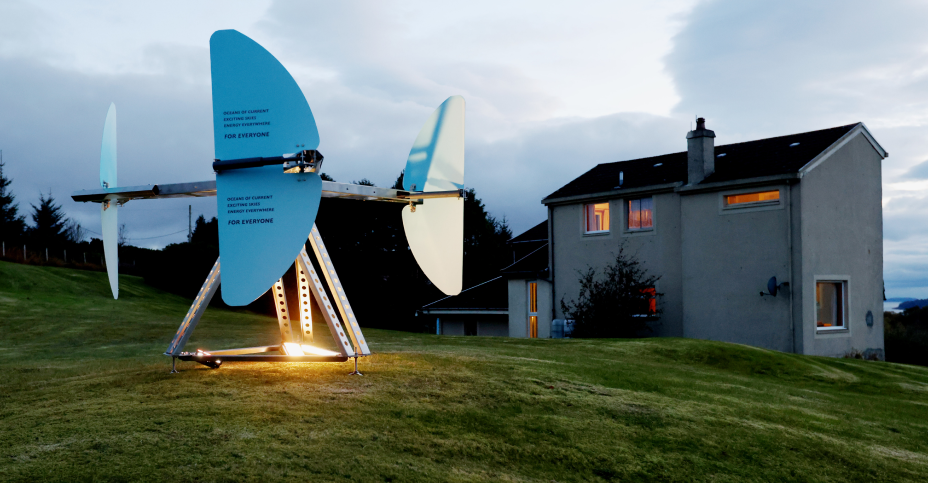
Vertical-axis wind machines are among the oldest forms of wind technology, with documented examples dating back more than a thousand years. Modern VAWT development accelerated in the 20th century with the work of Georges Darrieus, yet challenges around efficiency, self-starting and control have remained.
Maarten, Eric and Rob believed that modern engineering, combined with a novel approach to blade control and turbine architecture, could address those longstanding challenges. That belief became Flag Turbines.
Their ambition was simple: to develop a new form of wind energy that could operate efficiently at relatively low height, respond to wind from any direction and generate power close to where it is consumed. It also had to be scalable, straightforward to install and maintain, and suitable for locations ranging from farms and businesses to remote and off-grid communities.
Sustainability had to extend beyond the electricity being generated. The turbine was therefore designed around the principles of using fewer materials, avoiding complex composite materials wherever possible, maximizing recyclability and minimizing its environmental impact throughout its life.
Low rotational speed, limited visual impact and quiet operation were also fundamental to the design, allowing the turbine to work alongside people, wildlife and the surrounding environment.
To turn that vision into reality, the team formed BLOwN and brought together engineers and scientists to develop a new approach to wind generation. Years of design, modelling, prototyping and testing have resulted in Flag Turbines’ cycloidal vertical axis wind turbine technology, combining automatic variable blade control with a fundamentally different approach to capturing energy from the wind.
The objective remains the same as it was at the beginning: to make clean, locally generated energy available in more places, to more people.
Founders
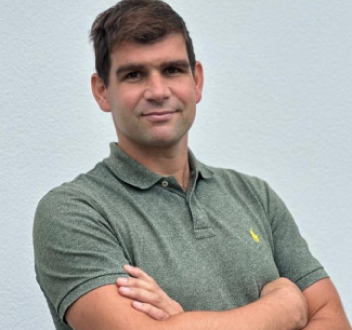
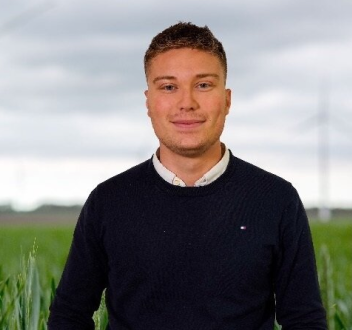
Maarten van Oeveren
Chief Executive Officer (R&D-1/VA-4)
Graduated mechanical engineer and business administration, certified lead quality auditor. Had
leadership
roles in Dutch Special Forces, new product and production line development teams. Experienced
manager
in high tech projects, ranging from high volume military equipment, automated guided trucks and
automotive production lines.
With a very strong conceptual and pro-active approach. Relies on physics, dares to extrapolate,
and strong analytical skills to continuously improve.
Maarten is married with three children.
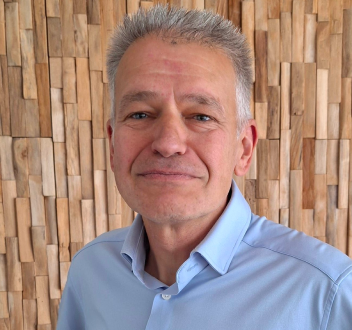
Eric Caron
Chief Technical Officer (R&D-1/ VA-3)
Graduated mechanical engineer, with a broad set of competences to create mechanical designs. His experience ranges from sensitive measurement systems to large automated driving trucks. Always designing for industrial production, based on state-of-art design and production tools and
technologies.
With a very practical approach, to ensure first time right design. ”If we don’t know, we test it”.
Eric is married with three children.
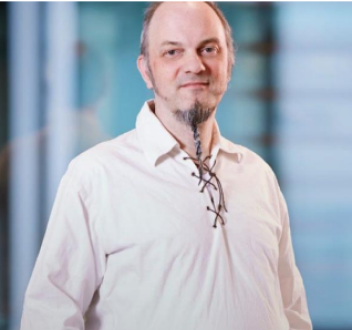
Graduated electrical and automotive engineer. Strong background in mechatronic system research and control, safety and airplane flight controls, automated vehicle controls. Strong in conceptual
thinking and fast forward acting to demonstrate with proof-of-concepts.
Extensively using already existing designs and state-of-the-art concepts. Improving these with out-of-the-box ideas and a broad range of knowledge and skills. Loves to learn by doing. Together with his wife runs his creative Art-and-Tech business.
The Team
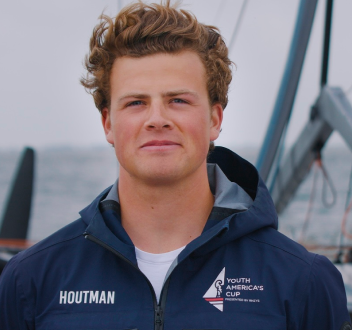
Marijn de Ruijter
Sr. Technical Purchaser (VA-3)
Mechanical buyer, with a wide suppliers network across Europe and Asia. Has a broad knowledge
of manufacturing processes, from production to corrosion protection and knows how to negotiate
and select suitable suppliers.
With a to-the-point approach to suppliers, requesting prices and initiating price and quality competition between suppliers. Hands-on and practical approach, not hesitating to call, visit or offer ideas for better manufacturability.
Andy Rogerson
Director, focussing on Strategic Partnerships, People and Performance
An experienced Executive and Entrepreneur who has built and sold businesses, in the Staffing and Human Resources sectors. More recently interested in the circular economy/green energy and helping emerging businesses. Leads from the front with energy and creativity. Carries a passion for developing others and enjoys watching colleagues grow and achieve success.
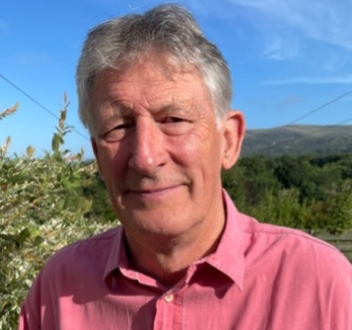
Andrew Pindar OBE
Advisory Board Member
British businessman and philanthropist recognized for leadership in global logistics and maritime industries through GAC Pindar. Passionate about sustainability and marine conservation and has played a pivotal role in promoting sailing worldwide. Andrew is also deeply involved in charitable initiatives focused on youth development and community engagement.