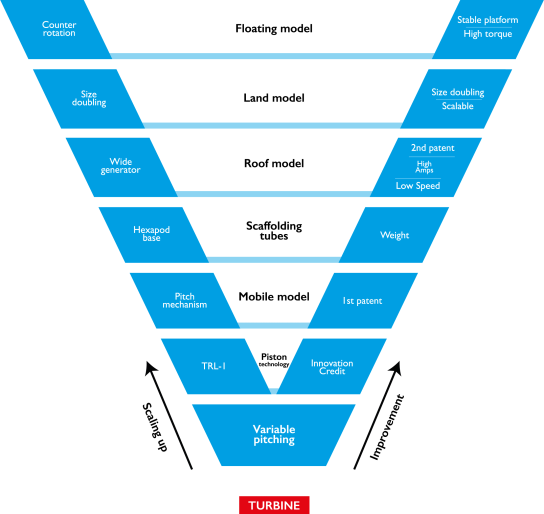
Flag Turbines uses an iterative R&D approach based on the V-Model (Verification and Validation Model). This methodology links each development stage with a corresponding testing and validation activity, helping us identify issues early and continuously improve the system as the technology scales.
We believe this approach is particularly well suited to Flag Turbines product development, where safety, aerodynamic performance, structural integrity and system reliability must all evolve together.
Turbine
Our turbine development began in 2019 and has progressed through 13 generations and approximately 25,000 hours of testing. What began as small-scale experimental systems has evolved into substantially larger land-based turbines, with each generation used to validate and improve aerodynamics, structure, drivetrain and control.
The modular architecture allows the rotor to scale through blade size and swept area rather than relying on extreme tower height. This gives the technology a clear development path from compact distributed-energy applications through to much larger land-based and floating systems.
Generator
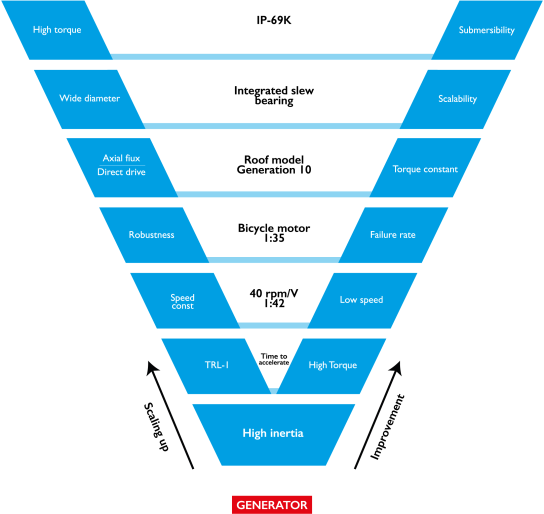
Our purpose-designed generator technology is optimized for high torque at relatively low rotational speeds. The direct-drive architecture removes the need for a conventional gearbox, reducing mechanical complexity, wear and maintenance requirements.
The generator has been developed alongside the turbine so that electrical and mechanical performance can be matched as the rotor scales.
Control Software
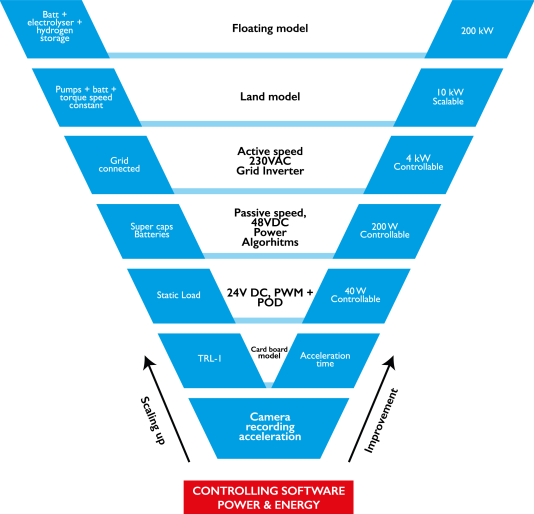
Our control and monitoring systems have developed alongside the turbine hardware. They support remote monitoring, data acquisition and control of turbine operation across changing wind conditions.
As the turbines grow, the control systems are becoming more advanced, optimizing performance while protecting the turbine and electrical system.